

What if the most natural-looking filling isn’t automatically the right one for your tooth? If you’ve searched for “tooth colored fillings Winnipeg,” appearance may be top of mind, especially if the filling will show when you smile. It matters, but the tooth’s condition, location and role in chewing also guide the choice.
It’s understandable to wonder what the procedure involves, whether it will be uncomfortable and how long a filling may last. You don’t have to choose a material on your own. At Triunity Family Dental Centre, an assessment helps identify the tooth’s needs and inform a suitable restoration. Early cavity detection and digital X-rays can also support the evaluation.
This guide explains how tooth-coloured fillings work, what to expect during treatment and which factors can affect a filling’s fit, appearance and durability. You’ll be better prepared to discuss your options with a Winnipeg dentist and decide whether a tooth-coloured filling may suit your tooth.
Key Takeaways
- Learn what tooth-coloured fillings are and when a dentist may consider them to restore a cavity.
- Compare filling materials by appearance, placement and limitations instead of assuming one option suits every tooth.
- Understand why a natural-looking match can vary with your tooth’s shade, lighting and the filling’s location.
- See what to expect during an appointment, from assessing the tooth to checking how your bite feels.
- Use the article’s checklist to prepare for a conversation about tooth colored fillings Winnipeg and whether one may suit your tooth.
What are tooth-coloured fillings, and when might a Winnipeg dentist recommend one?
Want to repair a cavity without leaving an obvious-looking restoration? A tooth-coloured filling is designed to blend with the natural tooth, making it a discreet way to restore an area affected by decay. If you’re researching tooth colored fillings Winnipeg, remember that the goal is to repair the damaged part of a tooth, not whiten its overall colour.
A dentist examines the tooth and considers how much healthy structure remains, where the damage is and how the tooth works when you bite. At Triunity Family Dental Centre, an assessment can include early cavity detection and digital X-rays when appropriate. The findings help determine whether a filling or another restoration is suitable.
How does a tooth-coloured filling restore a tooth?
To treat a cavity, the dentist removes the decayed portion and restores the affected area with filling material. Tooth-coloured composite is selected to resemble the surrounding tooth shade. Learn more about its materials and properties in this overview of dental composite resins.
The filling repairs the affected area, but it doesn’t reverse decay or change the shade of the whole tooth. If decay or damage has affected too much of the tooth, a filling may not provide enough support. Your dentist can explain the examination findings and discuss a suitable restoration.
When might a filling be considered instead of a crown?
The amount and location of damaged tooth structure both matter. A filling restores the affected area directly. A crown covers more of the tooth and may be considered when more extensive damage means a filling alone isn’t suitable.
There isn’t one restoration that fits every cavity. A small area of decay may call for a different approach than damage that weakens a larger part of a tooth. A dental assessment helps determine which option suits your tooth. If you’ve noticed a change or have questions about a visible cavity, an examination can clarify what’s happening and guide the next step.
How do tooth-coloured fillings compare with other filling options?
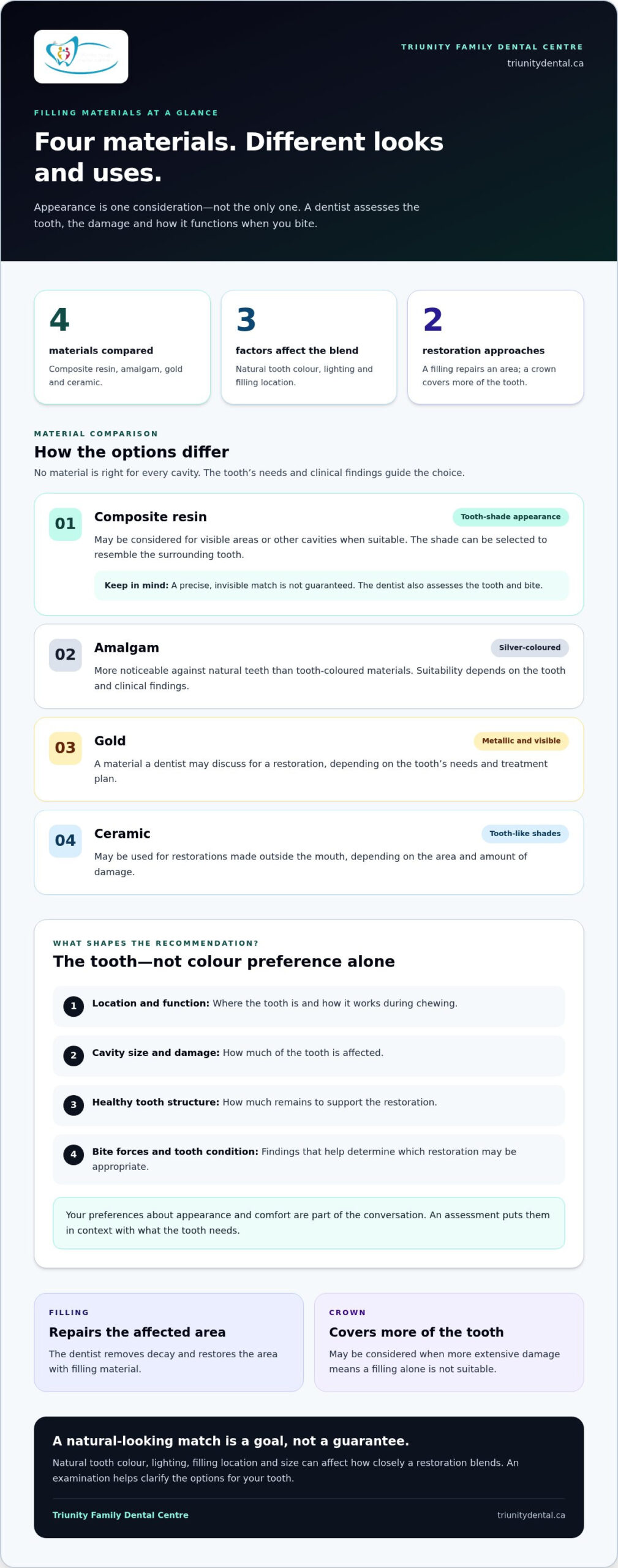
Composite resin is one of several materials a dentist may consider. It can be matched to a tooth shade, while other materials have different appearances and uses. No option is right for every cavity. The American Dental Association offers a useful overview to compare filling materials, including composite, amalgam and gold.
| Material | Appearance | Typical context and considerations |
|---|---|---|
| Composite resin | Tooth-shade appearance; a precise, invisible match isn’t guaranteed. | May be considered for visible areas or other cavities when suitable. The dentist assesses the tooth and bite. |
| Amalgam | Silver-coloured and more noticeable against natural teeth. | Its appearance differs from tooth-coloured materials. Suitability depends on the tooth and clinical findings. |
| Gold | Metallic and clearly visible. | One material a dentist may discuss for a restoration, depending on the tooth’s needs and treatment plan. |
| Ceramic | Can be made in tooth-like shades. | May be used for restorations made outside the mouth, depending on the area and amount of damage. |
What should patients know about composite fillings?
Composite resin combines resin with fine particles. Its shade can be selected to resemble the surrounding tooth, but the result may still be noticeable. Natural tooth colour, lighting and the filling’s location can affect how closely it blends. A shade match also doesn’t mean the filling changes the colour of the rest of the tooth.
Triunity Family Dental Centre provides tooth-coloured fillings in Winnipeg. The assessment guides the material and treatment approach for your tooth.
Which factors can affect the recommended filling material?
A dentist considers more than appearance. The tooth’s location affects how it functions during chewing. The cavity’s size, the amount of healthy structure remaining, bite forces and the tooth’s condition also help determine which restoration may be appropriate.
Your preferences belong in the conversation, too. If you’re weighing tooth colored fillings Winnipeg options, explain what matters to you about appearance and comfort. The examination findings help put those preferences in context. Colour preference alone can’t determine whether a material will suit the tooth.
Ready to discuss a restoration after a cavity is identified? Learn about fillings at Triunity Family Dental Centre.
Will a tooth-coloured filling look natural and feel comfortable?
A tooth-coloured filling is intended to blend with the surrounding tooth, but an exact match isn’t guaranteed. Natural teeth vary in shade, and lighting can change how a colour appears. A filling near the front of the mouth may also be easier to notice than one farther back. Keep these details in mind when considering tooth colored fillings Winnipeg.
How is the shade of a filling selected?
The dentist considers the nearby tooth when choosing a suitable shade. Teeth can have subtle differences in colour, even within the same mouth, so one shade won’t suit everyone. The restoration’s position and size can affect how visible it looks, too. Ask what appearance is realistic for your tooth. The aim is to blend, not to promise an invisible result.
What can you expect after the filling is placed?
Comfort during and after treatment varies. If you feel worried, tell your dentist before the appointment so they can explain what to expect and discuss your concerns. Don’t assume the experience will be pain-free, and speak up if something feels uncomfortable.
Some people notice temporary sensitivity after a filling, such as a response to hot or cold foods and drinks. Its duration and cause can vary, so pay attention to whether it settles, persists or worsens. If discomfort continues or becomes more noticeable, contact the clinic for guidance rather than trying to diagnose the cause yourself.
A filling may also feel uneven when you close your teeth together. If your bite feels high or doesn’t meet comfortably, let the dentist know. They can assess the restoration and consider whether an adjustment is needed. You shouldn’t have to put up with a filling that interferes with your bite.
Keep your expectations practical: shade matching and comfort are individual, and neither can be guaranteed in advance. Sharing your appearance preferences and any changes you notice helps your dentist understand what matters to you and decide whether the restoration needs a closer look.
What happens during a tooth-coloured filling appointment in Winnipeg?
Knowing the usual steps can make a filling visit feel more manageable. The process depends on the tooth and treatment plan, but it starts with an assessment and ends with a check of how your teeth come together. If you’re exploring tooth colored fillings Winnipeg, share any worries or questions before treatment begins.
How does the dentist assess a cavity?
Your dentist examines the tooth, asks about symptoms and reviews relevant dental and health history. Digital X-rays may help show areas that aren’t easy to assess by looking alone when clinically indicated. The findings help the dentist explain the tooth’s condition and discuss a suitable treatment approach.
What are the main steps in placing a filling?
Once you understand the proposed treatment, the appointment may follow these general steps:
- 1. Prepare the area. The dentist accesses the affected part of the tooth and removes decay as needed.
- 2. Place the filling. Filling material restores the treated area. The steps can vary with the tooth and the plan.
- 3. Shape the restoration. The dentist shapes the filling so it fits the tooth and its biting surface.
- 4. Check your bite. You’ll be asked to close your teeth together. If the filling feels uneven, let the dentist know so they can assess it.
Before your visit, note what you’ve noticed, such as sensitivity or discomfort, and share relevant health details, including changes to your health or medications. Bring your questions, too. Ask the dentist to explain a step or clarify what you may feel. No two teeth are exactly alike, so the process and appointment length can vary.
Triunity Family Dental Centre provides fillings in Winnipeg, with an assessment guiding the treatment plan. Discuss a tooth-coloured filling and the next step for your tooth.
How can you decide whether a tooth-coloured filling is right for you?
A tooth-coloured filling may suit your needs, but the decision starts with the tooth’s condition, not appearance alone. Use this checklist to organize what you’d like to discuss:
- Symptoms: Note any sensitivity, discomfort or changes you’ve noticed.
- Tooth location: Consider whether the affected tooth is visible when you smile or does much of your chewing.
- Previous dental work: Tell the dentist about earlier fillings or other treatment on that tooth.
- Appearance priorities: Share how important a tooth-shade restoration is to you, while keeping in mind that an exact match can vary.
Your dentist’s examination helps show the amount of decay and remaining tooth structure. Those findings, along with the tooth’s location and function, guide the recommendation. If you’re considering tooth colored fillings Winnipeg, your appearance preference is a helpful part of the conversation, but it can’t determine suitability on its own.
What questions can you bring to your dental visit?
You don’t need to have all the answers before you arrive. These questions can help you understand the recommendation and make a choice with confidence:
- Why are you recommending a filling for this tooth?
- What other restoration options may be appropriate, and why?
- What material are you recommending, and what should I expect it to look like?
- How should I care for it, and what sensitivity or discomfort should I watch for?
If you have dental benefits, contact your plan provider to ask about your coverage and any limits that may apply. Coverage varies by plan, so don’t assume reimbursement.
How can Triunity Family Dental Centre help with a cavity?
Triunity Family Dental Centre provides tooth-coloured fillings as part of its restorative dental care in Winnipeg. An assessment helps the dental team understand the cavity and discuss a suitable next step. Early cavity detection and digital X-rays can support the assessment when appropriate.
If you’ve noticed a change in a tooth or have been told you may need a filling, book a dental visit in Winnipeg to discuss your options. Bring your questions and talk through what matters to you, including appearance, comfort and the needs of the tooth.
Take the next step towards a suitable restoration
A tooth-coloured filling can restore a cavity with a shade intended to blend with your tooth, but appearance is only one part of the decision. The tooth’s location, the extent of decay and how much healthy structure remains all help guide the recommendation. An examination can clarify whether a filling is suitable and give you a chance to discuss your questions and priorities.
If you’re considering tooth colored fillings Winnipeg, remember that a natural-looking result can vary and the right option depends on your needs. Triunity Family Dental Centre provides fillings and restorative dental care in Winnipeg. Early cavity detection and digital X-rays can help assess a tooth when appropriate and support a discussion about treatment.
You don’t need to decide on your own. Bring up any symptoms, previous dental work or concerns about comfort and appearance. A conversation can help you understand the next step and feel more prepared.
Book a visit with Triunity Family Dental Centre to discuss a tooth-coloured filling. Taking time to understand your options is a positive step towards caring for your smile.
Frequently Asked Questions
Are tooth-coloured fillings as strong as other fillings?
Tooth-coloured composite fillings can withstand moderate chewing pressure, but their performance depends on the tooth, cavity size and bite. They may not be the best fit for every situation, such as a very large restoration or an area under heavy chewing forces. Other materials have different properties, too. Your dentist can assess the tooth and explain the trade-offs rather than treating one material as strongest for everyone.
How long do tooth-coloured fillings last?
Composite fillings often last around 7 to 10 years, though an individual filling may last for a shorter or longer time. Its location, size, chewing forces, oral habits and daily care can all affect how it holds up. Regular dental checkups help your dentist monitor the restoration. If you notice a change, such as a rough edge or discomfort, arrange an assessment instead of waiting for your next routine visit.
Does getting a tooth-coloured filling hurt?
Comfort varies from person to person and can depend on the tooth and the treatment needed. Tell your dentist if you feel anxious or have had discomfort during dental care before. They can explain the planned steps and discuss ways to support your comfort based on your needs. After treatment, some temporary sensitivity may occur. If discomfort persists or worsens, contact the clinic for advice.
Can a tooth-coloured filling be used on any tooth?
No, a tooth-coloured filling isn’t suitable for every tooth or cavity. A dentist considers where the tooth sits, how much decay is present, how much healthy structure remains and the pressure it takes during chewing. For example, a large cavity in a heavily used chewing tooth may need a different restoration. If you’re searching for tooth colored fillings Winnipeg, an examination can help determine what may work for your tooth.
How do I know if I need a filling?
A dental examination is the way to find out whether a filling is needed. A cavity may cause sensitivity or discomfort, but early decay can also have no obvious symptoms. Your dentist can examine the tooth and, when appropriate, use digital X-rays to assess areas that aren’t easy to see. If you notice a change or have a concern, book an assessment with a Winnipeg dentist rather than relying on symptoms alone.
Will my tooth-coloured filling match my natural tooth?
A tooth-coloured filling is intended to blend with your tooth, but an exact match can’t be guaranteed. Natural teeth have variations in shade, and lighting, the restoration’s location and its size can affect how noticeable it appears. Discuss your appearance priorities with your dentist before treatment. They can explain what’s realistic for your tooth and how the restoration’s purpose and placement factor into the plan.
Does insurance cover tooth-coloured fillings in Winnipeg?
Coverage depends on your dental plan, eligibility and its rules for filling materials. Ask your insurer what your plan covers and whether any limits or patient costs apply before treatment. The Canadian Dental Care Plan may cover composite fillings for eligible members, with coverage varying by income and program rules. Check your current CDCP coverage details, too. Triunity Family Dental Centre provides fillings in Winnipeg, but don’t assume a plan will reimburse the full cost.