
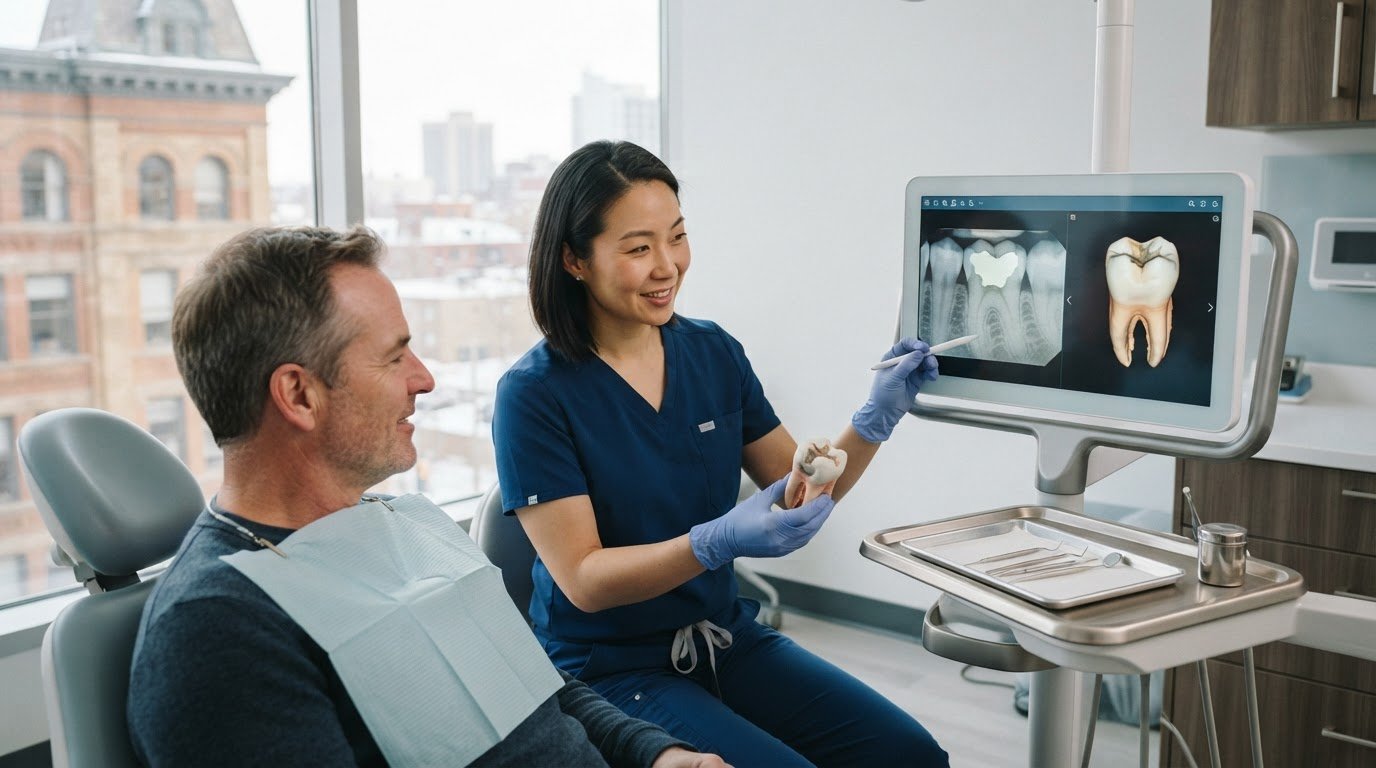
A cavity doesn’t automatically mean the same treatment for everyone. If you’re searching for dental fillings Winnipeg, you may be wondering whether a tooth needs attention, what a visit involves and how the dentist determines which treatment is right for it.
The answer starts with an assessment. A dentist examines the tooth and may use diagnostic tools such as digital X-rays to evaluate areas that are difficult to see directly. The size, location and condition of the affected area help guide whether a filling is suitable. You can also share your concerns and ask questions before treatment begins.
This article explains what fillings can address, how a Winnipeg dentist assesses a tooth, and what to expect during an appointment and follow-up. You’ll also find practical ways to prepare for a conversation about treatment. At Triunity Family Dental Centre, restorative care starts with understanding your tooth’s condition and discussing a suitable next step.
Key Takeaways
- A cavity’s size, location and condition help determine whether a filling is suitable.
- An examination and, when appropriate, digital X-rays can help assess areas that are difficult to see directly.
- Experiences during a filling appointment vary. Sharing anxiety and asking questions can help you feel more prepared.
- Before your visit, note your symptoms, medications and dental history, and bring questions about treatment or coverage.
- At Triunity Family Dental Centre, dental fillings Winnipeg patients receive are part of a diagnostic process that may include early cavity detection and digital X-rays.
Dental fillings in Winnipeg: what they treat and when they may help
A cavity diagnosis can raise practical questions: Does the tooth need treatment now, and is a filling the right option? A dental filling is a restorative treatment used to repair a tooth affected by decay or certain types of damage. The dentist examines the tooth first, because a mark or symptom alone does not determine the right approach.
Tooth decay develops when acids gradually weaken the hard outer surface of a tooth. If decay creates an area that needs repair, a filling can restore that part of the tooth. Fillings are one form of dental restoration, a broad term for treatments that repair or replace damaged tooth structure. Depending on the tooth and the extent of the problem, a filling may also be considered for limited damage such as a small chip.
How a cavity can lead to a dental filling
The dentist examines the affected area and considers what the assessment reveals before recommending treatment. If decay has damaged the tooth in a way that is suitable for a filling, the goal is to repair the area while preserving as much healthy tooth structure as possible. The recommendation depends on the tooth’s condition, not simply on whether it looks different or feels sensitive.
Early cavity detection can help identify changes so they can be assessed. At Triunity Family Dental Centre, early cavity detection and diagnostic information support this assessment. Finding a change does not automatically mean you need a filling. The dentist considers the tooth’s condition and explains the next step.
When Winnipeg patients should arrange a dental assessment
Arrange an assessment if you notice a visible change in a tooth, sensitivity or discomfort. These signs can have several causes, and they cannot confirm a cavity or show how far it may extend. Even if discomfort comes and goes, an examination can help determine what is happening rather than relying on a guess.
If pain starts suddenly or gets worse, arrange a scheduled dental assessment. Tell the dentist when it began, what seems to trigger it and whether it has changed. This context helps them understand your concern. Searching for dental fillings Winnipeg can be a starting point, but an examination helps determine whether a filling may help and what treatment is appropriate.
How a Winnipeg dentist assesses a cavity and plans a filling
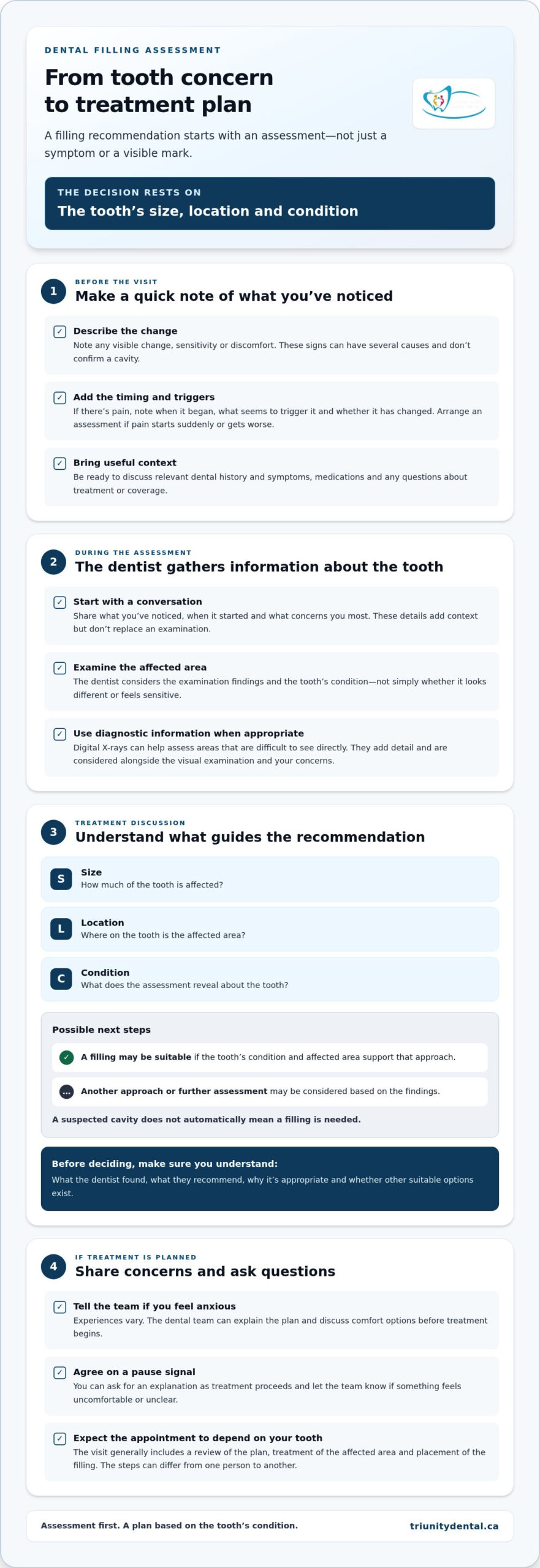
A filling recommendation follows an assessment, not just a symptom or visible mark. The dentist considers the examination findings and the tooth’s condition, then explains whether a filling may be suitable. Understanding the steps can make the visit feel more manageable and help you take part in the discussion.
What happens during a filling assessment?
The visit usually begins with a conversation. Describe what you’ve noticed, when it started and what concerns you most. The dentist may ask about relevant dental history and symptoms. These details help put the examination in context, but they do not replace it.
Next, the dentist examines the tooth. When appropriate, diagnostic information such as digital X-rays can help assess areas that are difficult to see directly. X-rays add detail but are considered alongside the visual examination and your concerns. Mayo Clinic’s overview of cavity diagnosis and treatment also describes how an examination and X-rays may contribute to diagnosis.
There is no automatic treatment for every suspected cavity. The dentist weighs the findings and the tooth’s condition before deciding whether a filling, another approach or further assessment may be appropriate.
How the treatment plan is discussed
After the assessment, the dentist can explain what they found, what they recommend and whether other suitable options exist. The tooth’s location and condition matter. For example, the dentist may consider how much of the tooth is affected and where the area is before discussing a filling plan. Ask for clarification if a term or recommendation is unclear. You should understand the reason for the proposed next step before deciding how to proceed.
When researching dental fillings Winnipeg patients may receive, use your appointment to understand what the findings mean for your tooth, not only whether a filling is possible. You can also read our cavity treatment in Winnipeg guide for related information.
At Triunity Family Dental Centre, an examination, early cavity detection and digital X-rays can support the diagnostic process. If you’ve noticed a change or have a concern, learn about dental care in Winnipeg and arrange an assessment to discuss your tooth.
Will a dental filling hurt? What to expect during the visit
It’s understandable to feel nervous about a filling. Experiences vary, so no one can promise exactly how treatment will feel. Tell the dental team about your anxiety before treatment begins. They can explain the plan, discuss comfort options and agree on how you can signal if you need a pause.
What a dental filling appointment may involve
The appointment generally starts with a review of the treatment plan and time for any last questions. The dentist then treats the affected area and places the filling, checking the tooth as part of the process. The steps depend on the tooth and the recommended treatment, so your visit may differ from someone else’s.
You can ask the dentist to explain what is happening as they go. If something feels uncomfortable or you are unsure what to expect next, let the team know. You can also agree on a simple signal to request a pause. The National Institute of Dental and Craniofacial Research provides an overview of what dental fillings treat and the general treatment process, which may help you prepare questions.
Questions to raise if you feel nervous
Before treatment starts, mention what worries you most. It might be uncertainty about the steps, a past dental experience or not knowing what sensations to expect. You do not need to find perfect words. Sharing the concern gives the dentist a chance to respond and explain what to expect clearly.
- “Can you explain each step before you begin?”
- “How can I let you know if I need a pause?”
- “What should I tell you if I feel discomfort?”
It’s also reasonable to ask how the recommendation relates to your tooth’s condition. A filling and root canal address different treatment needs, and the assessment guides which approach may be appropriate. If you’re comparing them, read our tooth fillings and root canals guide for more context.
If you’re searching for dental fillings Winnipeg options, discuss your concerns and the recommended restorative care with the dental team at Triunity Family Dental Centre. A straightforward conversation before treatment can help you feel more prepared and know how to speak up during the visit.
Preparing for dental fillings in Winnipeg: questions and practical next steps
A little preparation can make it easier to explain what is bothering you and understand the recommendation. Before an assessment for dental fillings in Winnipeg, jot down a few details and bring your questions. You do not need to know what treatment you need before you arrive.
What to share and ask before treatment
Start with what you’ve noticed. Note when a symptom began, what seems to trigger it and whether it has changed. A visible change, sensitivity or discomfort can give the dentist useful context, but they will assess the tooth before recommending care.
Share relevant dental or medical history and your current medications. These details help the dental team understand your situation and discuss care with you. If you are unsure whether something matters, mention it.
Consider writing down questions such as:
- What did you find during the assessment?
- Why do you recommend this treatment for my tooth?
- What steps will the treatment involve, and are there alternatives?
- What follow-up should I expect?
The dentist can explain the findings and recommended approach in plain language. If you have questions about insurance or another plan, bring the relevant details. Review your plan’s terms and how they apply to the recommended care, since coverage depends on the specific plan and treatment.
Planning for coverage and aftercare
Before your visit, check your plan documents for information about dental treatment, pre-authorization or submitting a claim. The dental team can discuss the treatment recommendation and related coverage questions. Your plan documents explain the terms that apply to your coverage, so do not assume a particular service or amount will be covered.
Before leaving after treatment, make sure you understand the instructions for your specific care and what to do if you have concerns. Advice can vary with the treatment provided, so follow the guidance given for your appointment rather than general tips.
Ready to discuss a tooth concern or filling recommendation? Arrange a dental assessment with Triunity Family Dental Centre and bring your questions along.
Dental fillings at Triunity Family Dental Centre in Winnipeg
If you’re looking into dental fillings Winnipeg, the right next step is to understand the tooth’s condition. Triunity Family Dental Centre provides fillings and restorative dental care in Winnipeg. The team can listen to your concerns, assess the tooth and explain the findings in everyday language, so you can understand how the recommendation relates to your situation.
A clear, patient-centred approach to fillings
A filling may be recommended when an assessment shows that the affected part of a tooth can be restored this way. The dentist considers the tooth’s condition and explains the proposed approach. Share what you’ve noticed, mention any worries about treatment and ask for clarification at any point. A clear conversation helps you understand why the treatment is recommended and what to consider before proceeding.
Diagnostic information can also be part of that conversation. Triunity Family Dental Centre offers early cavity detection and digital X-rays, which can help assess changes or areas that are difficult to see directly when appropriate. These tools support the assessment, while the recommendation depends on the findings for your tooth. A filling is not automatically the answer for every concern, and the dentist can discuss care suited to the assessed condition.
Sometimes a tooth needs a different treatment approach. Root canal therapy is a separate restorative treatment that may be considered when the assessment indicates a need beyond a filling. The dentist can explain the findings and why a particular option is being discussed. If you are unsure about the difference, ask what each approach is intended to address and how the recommendation applies to your tooth.
Take the next step with a Winnipeg dental team
If you suspect a cavity or have questions about a filling, an assessment can help clarify what is happening. Before booking, note any sensitivity, discomfort or visible change, when you first noticed it, and the questions you want answered. Mention these concerns when you request an appointment so the team has helpful context for your discussion.
You do not need to arrive with a diagnosis or treatment decision. Start with what you’ve noticed. At Triunity Family Dental Centre, you can discuss your concerns with the team and learn what the assessment suggests for your tooth. Arrange an appointment with Triunity Family Dental Centre to discuss a suspected cavity or dental fillings in Winnipeg.
Take the next step towards a healthier smile
A cavity doesn’t tell the whole story. An examination and diagnostic findings help determine whether a filling is suitable or another treatment may be needed. Your symptoms, questions and concerns are part of the conversation, too, helping you understand the recommendation and what to expect.
If you’re considering dental fillings Winnipeg, Triunity Family Dental Centre provides fillings and other restorative dental care. Early cavity detection and digital X-rays can support the diagnostic process, helping the team assess your tooth and discuss a practical next step with you.
If you’re unsure what a change or sensitivity means, share what you’ve noticed and ask the questions that matter to you. Arrange an appointment with Triunity Family Dental Centre to discuss your concerns and explore appropriate care.
Frequently Asked Questions
Do I need a dental filling if my tooth does not hurt?
Possibly. A tooth can have decay without causing pain, so the absence of discomfort does not rule out a cavity. Sensitivity or pain alone also cannot show how extensive a problem may be. A dental assessment helps determine the tooth’s condition. The dentist can examine the area and review diagnostic information when appropriate, then explain whether a filling or another next step may suit your needs.
How does a dentist know whether I need a filling?
The dentist bases the recommendation on the tooth’s assessed condition, not symptoms alone. They’ll ask about your concerns, examine the tooth and consider relevant diagnostic information. Digital X-rays may help assess areas that are difficult to see directly when appropriate. The findings guide the recommendation: a filling may suit some affected areas, while another approach may be considered if the tooth needs different care.
Will getting a dental filling hurt?
Experiences vary, so it’s best not to assume exactly how your appointment will feel. Tell the dental team if you’re anxious or concerned about discomfort before treatment begins. Ask what to expect and how to signal that you need a pause or an explanation. The dentist can discuss the approach and comfort options with you, but no one can guarantee a completely pain-free experience.
How long does a dental filling appointment take?
The appointment time depends on the tooth and the care needed, so there is no single duration for everyone. The dentist can explain the planned steps after assessing your tooth. If you’re arranging dental fillings in Winnipeg, mention any scheduling questions when you book and ask what to expect for your specific visit. Another person’s appointment time may not be a useful guide.
Can a cavity need more than a filling?
Yes. The right treatment depends on what the dentist finds during the assessment and how the tooth is affected. A filling restores an area of a tooth when that approach is suitable. Root canal therapy is a separate treatment that may be considered when the tooth needs a different approach. The dentist can explain the findings, why an option is recommended and what questions to consider.
How much do dental fillings cost in Winnipeg?
The cost depends on the findings for your tooth, the treatment recommended and any applicable coverage through your dental plan. An assessment helps establish what care may be needed, while your plan documents explain the terms that apply to you. Discuss the recommendation and coverage questions with the dental team at your Winnipeg appointment. Do not assume a particular service or amount will be covered.
What should I do after getting a dental filling?
Follow the instructions your dentist gives you for your specific treatment. They can explain what to expect and what steps, if any, are recommended for your care. If you’re unsure about an instruction or notice a concern after your visit, contact the clinic for guidance.