
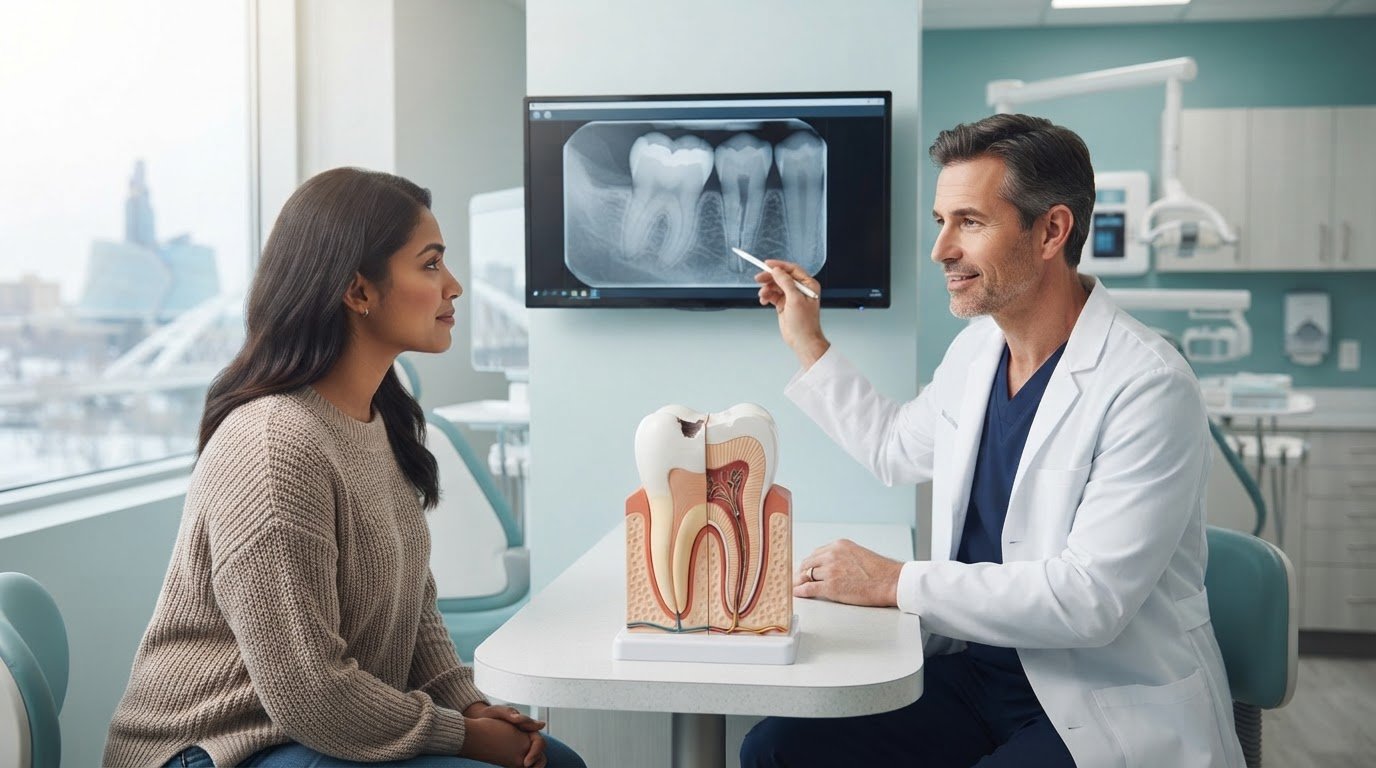
When you’re weighing a tooth filling or root canal, the depth of the decay or damage matters more than how much the tooth hurts. A sudden ache or sensitivity to cold can be unsettling, and it’s natural to wonder whether a root canal means the tooth can’t be saved. Root canal treatment is often intended to preserve a damaged tooth, not remove it.
A filling may repair decay that hasn’t reached the inner pulp. If the pulp is inflamed or infected, a root canal may be recommended. Symptoms alone can’t confirm which treatment is appropriate, so an examination is important.
This guide explains how fillings and root canals differ, what a dentist checks during an exam, and how digital X-rays can help assess a tooth. You’ll also find useful details to share and questions to ask at your assessment with Triunity Family Dental Centre in Winnipeg.
Key Takeaways
- A filling repairs a damaged area, while a root canal treats affected inner pulp. The tooth’s condition guides which option may be suitable.
- To decide between a tooth filling or root canal, a dentist considers your symptoms, examines the tooth, and may use imaging.
- Tooth pain or a deep cavity doesn’t automatically mean you need a root canal. What matters is how the tooth’s inner pulp is affected.
- Learn what to expect from each treatment and which details can help you understand your dentist’s recommendation.
- Book an assessment at Triunity Family Dental Centre in Winnipeg to discuss your tooth and possible next steps.
Tooth filling or root canal: what does each treatment do?
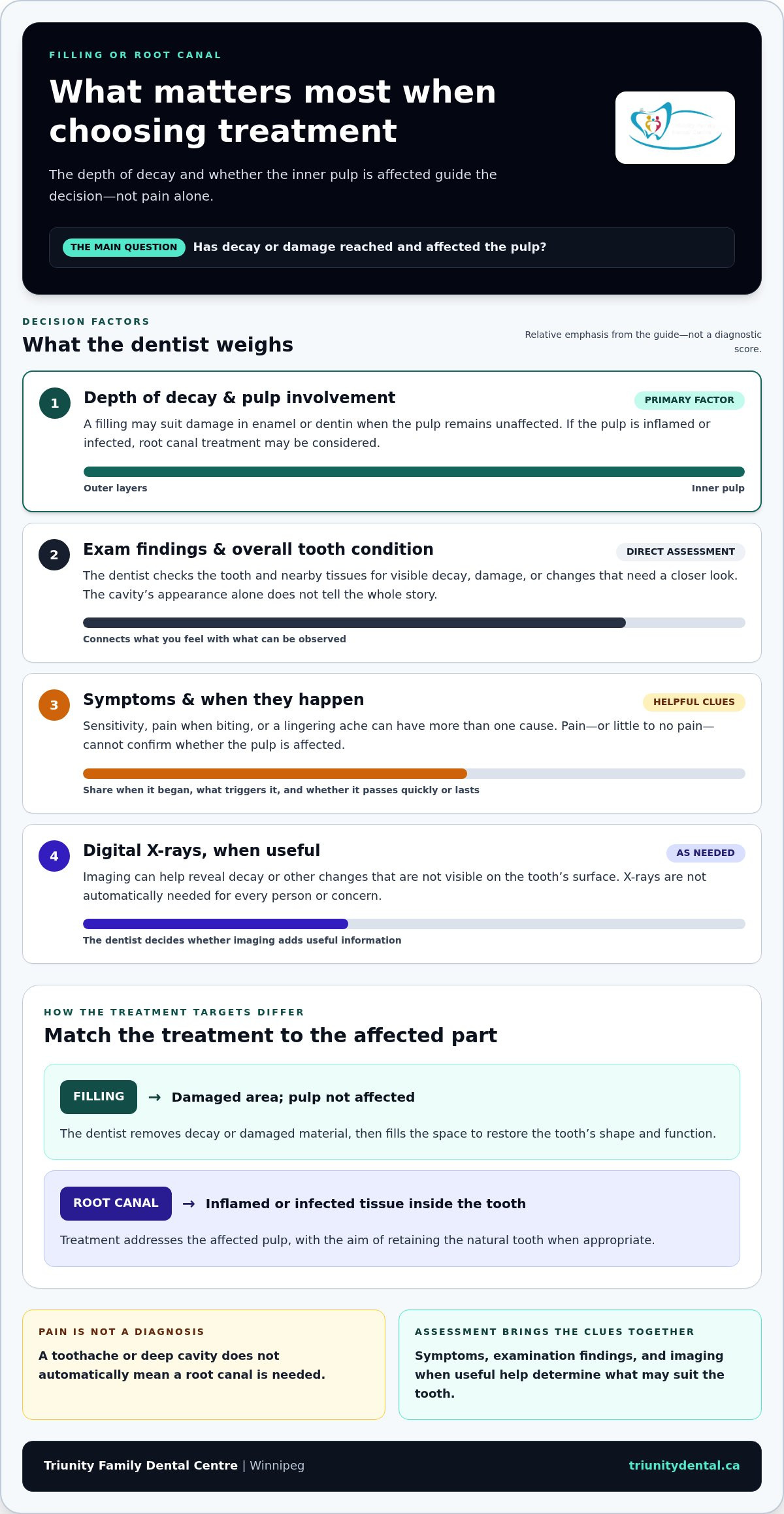
A filling repairs a damaged area of a tooth. Root canal treatment addresses inflamed or infected tissue inside it. The choice isn’t about preferring one procedure over another. It depends on how far decay or damage has reached and whether the inner pulp is affected.
To understand the difference, picture the tooth’s layers. Enamel is the hard outer covering. Dentin lies beneath it and makes up much of the tooth. At the centre is the pulp, which contains nerves and blood vessels. When decay stays in the outer layers, a filling may be an option. If decay reaches and affects the pulp, the dentist may consider root canal treatment.
How deeply decay reaches helps guide whether a tooth may need a filling or treatment for its inner pulp. This is a useful starting point, but an assessment is needed to determine what’s suitable for your tooth.
What does a dental filling repair?
A filling repairs an area affected by decay or damage. The dentist removes the decayed portion, then fills the space to restore the tooth’s shape and function. A filling may be considered when the damage hasn’t reached the pulp. The dentist assesses how extensive the damage is and whether a filling is appropriate.
For example, a cavity in enamel or dentin may be treatable with a filling if the pulp remains unaffected. The cavity’s appearance alone doesn’t tell the whole story. The dentist considers the tooth’s overall condition before recommending care.
What does root canal treatment address?
Root canal treatment is used when the pulp inside a tooth is inflamed or infected. It treats the affected tissue within the tooth, rather than simply filling a damaged spot on its surface. The aim is to address the problem inside and retain the natural tooth when appropriate. For a broader overview of root canal treatment, you can read more about the procedure and why it may be used.
Whether you’re considering a tooth filling or root canal, the recommendation depends on the assessment findings. A filling and a root canal address different parts of the tooth, and neither is automatically the right choice based only on a cavity’s size or the amount of discomfort. Your dentist can explain what they find and why a particular treatment may suit your tooth.
How dentists decide between a filling and a root canal
Choosing between a filling and a root canal starts with understanding what’s happening in the tooth. Your dentist considers your symptoms, examines the tooth and nearby tissues, checks for decay or damage, and may recommend imaging when it can add useful information. The assessment is guided by your individual needs.
A diagnosis needs a dental assessment, not symptom-matching alone. Pain can offer clues, but it can’t reliably show how far decay has progressed or which treatment is right. An assessment connects what you feel with what the dentist can observe.
What can an exam and dental X-rays show?
During an exam, the dentist looks at the tooth and surrounding area for visible signs of decay, damage, or changes that need a closer look. They may ask about sensitivity or pain and examine the affected area.
When appropriate, digital X-rays can help reveal decay or other changes that aren’t visible on the tooth’s surface. They provide additional information to help assess the tooth. X-rays aren’t automatically needed for every person or concern. The dentist determines whether imaging is useful for your situation.
Why pain alone can’t choose the treatment
Tooth sensitivity or pain can have more than one cause. A twinge with cold food, discomfort when biting, or a lingering ache doesn’t confirm that decay has reached the pulp. Likewise, little or no pain doesn’t necessarily mean the tooth is healthy. The tooth’s condition needs to be considered alongside your symptoms.
When describing what you’re feeling, include when it began, what seems to trigger it, and whether it goes away quickly or lasts. These details help your dentist understand the concern, but they’re only one part of the assessment. For a general explanation of what happens during the root canal procedure, the American Association of Endodontists offers a step-by-step guide.
If you’re unsure what your symptoms mean, an individual assessment can help clarify the next step. You can book a dental assessment in Winnipeg with Triunity Family Dental Centre to discuss your concerns and findings.
Tooth filling or root canal: compare purpose, process, and follow-up
A filling and a root canal address different levels of tooth involvement. A filling repairs a damaged area, while root canal treatment addresses affected tissue inside the tooth. Neither is automatically better. The dentist considers the assessment findings and discusses a plan suited to the tooth and your circumstances.
| Treatment | Main target and purpose | What helps determine suitability |
|---|---|---|
| Filling | A damaged area of the tooth, repaired to restore its shape and function. | The extent of decay or damage and whether the inner pulp is affected. |
| Root canal | Inflamed or infected tissue inside the tooth, treated with the aim of retaining the tooth when appropriate. | Assessment findings about the pulp and the tooth’s overall condition. |
How the treatment approaches differ
For a filling, the dentist removes decay or damaged tooth material and restores the affected area. Root canal treatment focuses on tissue inside the tooth. Its general aim is to treat the problem within while keeping the tooth when appropriate. The American Dental Association’s guide to root canal treatment offers more patient-friendly background on why it may be recommended.
Both treatments respond to a dental concern identified through assessment. Symptoms alone don’t determine the choice. If you’re weighing a tooth filling or root canal, your dentist can explain what the exam shows and how those findings inform the recommendation.
What to know about restoration and follow-up
The recommended treatment may not be the only part of the plan. Depending on the tooth’s condition, your dentist will discuss whether further restoration is appropriate. This helps you understand what the treatment is intended to address and what care may follow.
Follow-up guidance varies with the procedure and your circumstances. Ask your dentist what to expect after treatment and how to care for the tooth as it heals or settles. Follow the instructions provided for your treatment and raise any questions with your dental team.
Is a root canal always needed for tooth pain or a deep cavity?
No. Tooth pain doesn’t automatically mean you need a root canal, and a deep cavity doesn’t automatically mean one is needed either. What matters is where the decay is and whether it has affected the pulp inside the tooth. If the pulp isn’t affected, a filling may still be an option, depending on the dentist’s examination.
Pain can have different causes, and how strong it feels doesn’t reliably show what’s happening inside the tooth. A dentist considers your symptoms alongside an examination and, when appropriate, imaging. This helps assess whether decay, damage, or another concern may be involved. The next step depends on what the assessment reveals, not on one symptom alone.
Can a tooth need a filling even when it hurts?
Yes, it’s possible for a tooth to hurt and still be suitable for a filling. Discomfort may be linked to decay that hasn’t affected the pulp, but pain alone can’t confirm that. A filling may be considered if the pulp isn’t involved and the rest of the assessment supports it.
When considering a tooth filling or root canal, the dentist looks at the tooth’s condition rather than matching a symptom to a treatment. Describe what you feel, including what brings the pain on, how long it lasts, and whether it’s changing. These details help guide the assessment, but they don’t replace it. A filling may address decay, but it isn’t possible to promise it will resolve every symptom before the cause is understood.
When should you seek dental care for tooth pain?
Arrange a dental assessment if pain persists, worsens, or interferes with eating, sleeping, or daily activities. It’s also sensible to seek prompt professional attention after dental trauma or if your symptoms change rapidly. An assessment can help identify the concern and guide an appropriate next step.
If you’re worried about pain, you don’t need to decide at home whether it calls for a filling or root canal. Triunity Family Dental Centre provides emergency dental care as well as assessments for tooth concerns. Book a dental assessment to discuss your symptoms and understand your options.
Choosing your next step for a filling or root canal in Winnipeg
If you’re wondering whether you need a tooth filling or root canal, the most useful next step is an assessment, not a guess based on pain or a look in the mirror. A dentist can examine the tooth, consider what you’re experiencing, and explain which care may be suitable. That way, the recommendation is based on your tooth’s condition.
What to share at your dental assessment
A few details about your symptoms can help the dental team understand your concern. Before your appointment, think about:
- When the discomfort or sensitivity began, and whether it has changed.
- What seems to trigger it, such as hot or cold foods, chewing, or pressure.
- Whether you’ve had a recent injury or another change involving the tooth.
- What questions you have about the examination findings or recommended options.
You don’t need to identify the cause yourself. Sharing what you’ve noticed gives the dentist useful context to consider alongside the examination.
How Triunity Family Dental Centre can help
Triunity Family Dental Centre in Winnipeg provides early cavity detection, digital X-rays, fillings, and root canal treatment. The dental team assesses the tooth and discusses the findings and suitable care with you. When appropriate, digital X-rays can help assess areas that aren’t visible during a visual examination.
Use your appointment to ask what the assessment shows, why a treatment is being recommended, and whether further restoration or follow-up may be part of the plan. Understanding the reasoning can help you feel prepared to take the next step.
If tooth pain is persistent, worsening, or concerning, arrange an assessment rather than trying to decide at home which treatment you need. Book an appointment with Triunity Family Dental Centre to discuss your tooth and care options with the team.
Take the next step with confidence
A tooth filling or root canal isn’t a choice you need to make based on pain alone. A filling repairs a damaged area, while root canal treatment addresses affected tissue inside the tooth. The right recommendation depends on what an examination shows, including how far decay or damage has progressed.
At Triunity Family Dental Centre in Winnipeg, the team provides fillings and root canal treatment. Digital X-rays can help assess dental concerns when appropriate. Your assessment is a chance to understand the findings, hear which options may suit your tooth, and ask questions before deciding on next steps.
If you have ongoing tooth pain or concerns about a cavity, arrange an assessment instead of trying to diagnose the problem at home. Book an assessment with Triunity Family Dental Centre to discuss your tooth and take a clear next step for your dental health.
Frequently Asked Questions
Can a dentist tell if I need a filling or a root canal?
Yes. A dentist examines the tooth, considers your symptoms, and may use dental X-rays to assess decay or damage. The recommendation depends on the findings, including whether the inner pulp is affected. Pain alone can’t confirm which treatment is appropriate. Ask your dentist to explain what they see and why they recommend a particular option. Understanding the reason for the plan can help you feel prepared for the next step.
Does a deep cavity always need a root canal?
No. A deep cavity doesn’t automatically mean you need root canal treatment. Its location and effect on the tooth’s inner pulp matter, and a dentist needs to assess the tooth before recommending care. Depending on the findings, a filling or another treatment may be discussed. Don’t rely on manageable symptoms as a reason to delay an assessment. An examination can clarify what’s happening and which options may be suitable.
Can tooth pain mean I need a filling instead of a root canal?
Yes, it can, but pain alone can’t identify the cause or the right treatment. Decay, tooth damage, or another dental concern may cause discomfort, and symptoms vary from person to person. An examination, with imaging when appropriate, helps the dentist assess the tooth. Share when the pain began, what seems to trigger it, and whether it’s changing. These details provide useful context when considering whether a filling or another treatment may be appropriate.
Is a root canal more serious than a filling?
Not necessarily. A filling and a root canal address different concerns, so one isn’t simply a more serious version of the other. The appropriate option depends on the examination findings. Your dentist can explain the purpose of the recommendation and whether the tooth may need further restoration or follow-up care.
What happens if I delay treatment for a cavity?
Decay can progress, although the rate varies from tooth to tooth. If damage becomes more extensive, it may affect which treatment options are suitable. A dentist can assess the cavity and explain its condition before you decide on care. Don’t use pain levels alone to judge whether a cavity can wait. If discomfort persists or worsens, arrange an assessment to understand what’s happening and discuss next steps.
Does a root canal mean the tooth has to be removed?
No. Root canal treatment addresses affected tissue inside the tooth and may allow the tooth to remain in place when appropriate. It doesn’t automatically mean the tooth must be removed. Whether treatment is suitable depends on the tooth’s condition and the dentist’s assessment. Ask about the treatment goal, what the findings show, and whether further restoration or follow-up is recommended for your tooth.
When should I see a dentist for tooth pain in Winnipeg?
Arrange an assessment if tooth pain persists, worsens, or interferes with eating or daily activities. Seek prompt professional advice after dental trauma or if symptoms change quickly. Triunity Family Dental Centre in Winnipeg offers scheduled emergency dental appointments during standard clinic hours. An assessment can help identify the concern and guide the next step. Describe when the pain began and any changes you’ve noticed so the team has helpful context.